


Ecommerce businesses frequently encounter a fundamental performance challenge: increasing website traffic without achieving proportional growth in conversions. This disconnect between visitor volume and purchasing behavior highlights a core issue in digital commerce—traffic quality matters more than traffic quantity.
Ecommerce traffic quality refers to how relevant, engaged, and conversion-ready website visitors are based on their intent, behavior, and alignment with a store’s offerings. High-quality traffic increases the likelihood of purchases, while low-quality traffic leads to inefficiencies in marketing performance.
For Shopify merchants, improving traffic quality requires a combination of marketing strategy optimization and user behavior analysis. As ecommerce ecosystems become more complex, businesses must evaluate not only where traffic originates but also how users interact with content and move through the conversion funnel.
According to the Shopify ecommerce analytics guide, merchants can analyze traffic sources, customer behavior, and sales performance to identify inefficiencies and optimize outcomes.
In modern ecommerce environments, customer journeys are rarely linear.
Research from Think with Google consumer journey insights shows that users often interact with multiple touchpoints before making a purchase.
This multi-channel behavior makes it necessary to evaluate both acquisition strategies and engagement quality. This article provides a structured, data-driven analysis of ecommerce traffic quality in Shopify stores. It explains how traffic quality is defined, how it impacts performance, what strategies improve it, and how businesses can optimize conversion outcomes through data and technology.
What Is Ecommerce Traffic Quality?
Ecommerce traffic quality refers to the relevance, intent, and engagement level of visitors arriving at a website.
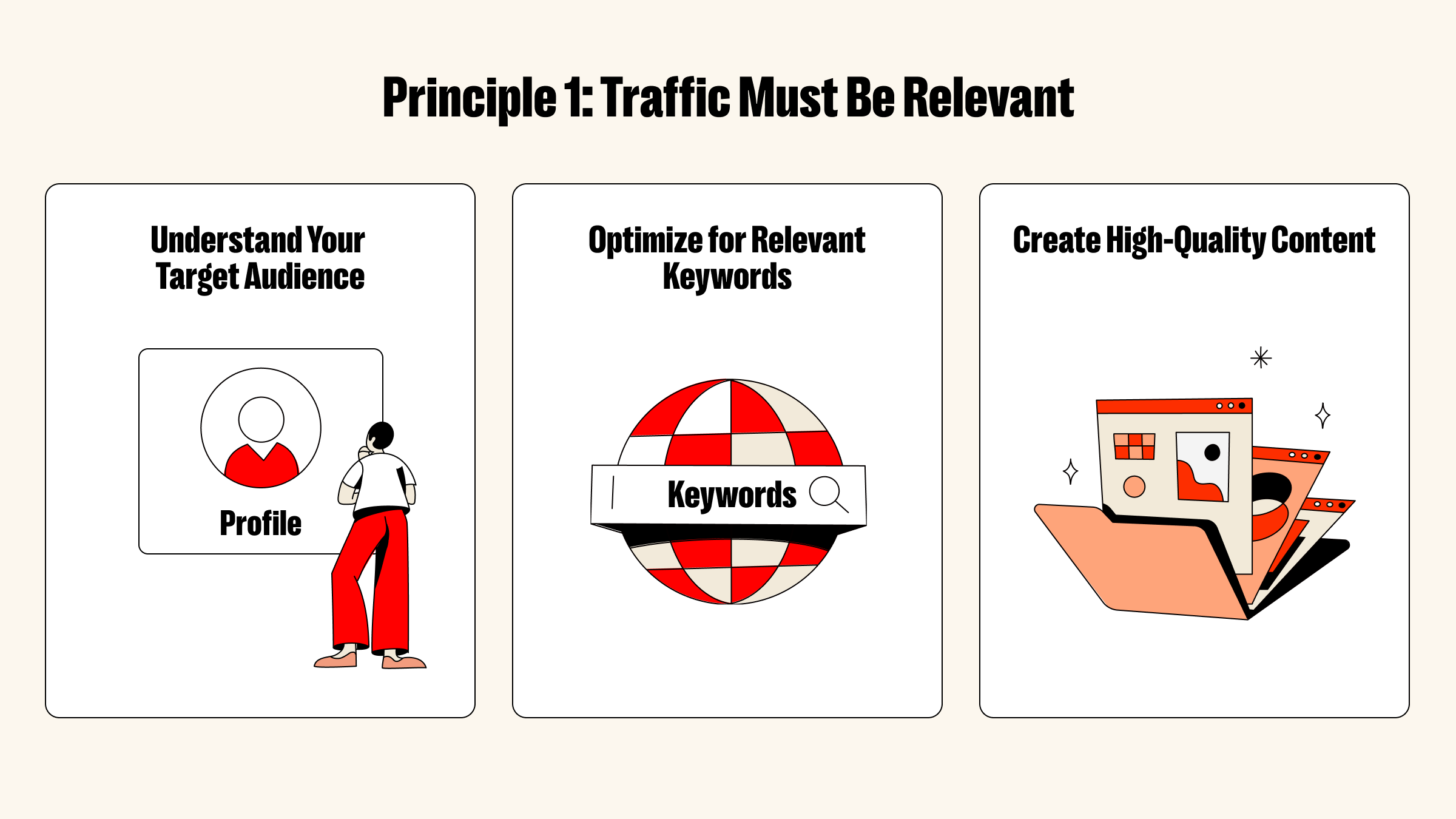
Source: Shoplazza
Key Definition
High-quality traffic consists of users with strong purchase intent and meaningful engagement, while low-quality traffic includes visitors who are less likely to convert due to weak relevance or intent.
Core Components
- Relevance: Alignment between user needs and product offering
- Intent: Likelihood that a user is ready to purchase
- Engagement: Depth of interaction with the website
Traffic quality is a primary driver of conversion rates and long-term profitability, as it determines how effectively visitors can be converted into customers.
Why Does Traffic Quality Matter in Shopify Stores?
Traffic quality directly influences key ecommerce performance metrics.
Core Explanation
High-quality traffic leads to higher conversion rates, improved customer lifetime value, and more efficient marketing spend, while low-quality traffic increases costs without generating proportional revenue.
Key Impact Areas
- Conversion rate: Higher intent leads to more purchases
- Customer lifetime value (CLV): Better customers generate long-term revenue
- Return on investment (ROI): Efficient traffic improves profitability
Research from Harvard Business Review on customer value highlights that acquiring and retaining the right customers is essential for long-term business success.
How Is Traffic Quality Evaluated in Ecommerce?
Businesses use data analytics to assess visitor engagement and intent.
Core Explanation
Traffic quality is evaluated by analyzing user behavior metrics that indicate engagement, interest, and conversion likelihood across different traffic sources.
.jpg)
Source: Marapost
Key Indicators
- Bounce rate
- Session duration
- Pages per session
- Add-to-cart activity
- Conversion rate by traffic source
Tools such as Google Analytics ecommerce tracking allow businesses to analyze these metrics and identify underperforming channels.
What Marketing Strategies Improve Traffic Quality?
Shopify marketing strategies focus on attracting users who are more likely to convert.
Audience Segmentation
Audience segmentation uses behavioral, demographic, and intent-based data to identify high-value users and improve traffic relevance.
SEO and Content Optimization
- Align keywords with user intent
- Optimize product descriptions
- Structure content for discoverability
Paid Advertising and Retargeting
- PPC campaigns
- Social media advertising
- Retargeting strategies
Email Marketing and Personalization
According to HubSpot email marketing statistics, personalized campaigns improve engagement and conversion rates.
Technology Overview: Tools Supporting Traffic Optimization
Core Explanation
Technology platforms enable businesses to track user behavior, analyze performance, and optimize marketing strategies through integrated data systems.
Key Tool Categories
- Analytics platforms: Track user behavior and conversions
- Attribution tools: Measure channel performance
- Behavior analysis tools: Identify user friction
- Marketing automation tools: Enable segmentation and personalization
Example Platform: AI Marketing and Retargeting
Some platforms combine analytics and automation to improve traffic quality and conversion performance.
For example, Akohub AI Retargeting & Loyalty for Shopify provides features such as retargeting campaigns, referral programs, and loyalty systems.

Limitations and Considerations
- Attribution across multiple channels is complex
- Data accuracy depends on tracking implementation
- Consumer behavior varies by region and device
- Over-optimization may reduce efficiency
Future Trends in Ecommerce Traffic Optimization
- AI-driven personalization
- Real-time analytics systems
- Predictive customer behavior modeling
FAQ
What is ecommerce traffic quality?
Traffic quality refers to how relevant and likely visitors are to convert based on intent and engagement.
Why is traffic quality more important than traffic volume?
High-quality traffic leads to better conversions, while low-quality traffic increases costs without generating revenue.
How can Shopify stores improve traffic quality?
By refining targeting, optimizing SEO, improving user experience, and using data analytics.
Conclusion
Ecommerce traffic quality is a central factor in determining conversion performance. By focusing on relevant audience targeting and improving user experience, Shopify merchants can transform traffic into measurable business outcomes.
Continuous analysis, testing, and refinement remain essential for long-term ecommerce success.
Try Akohub for FREE today and start building your loyalty program!
Reach out to us at service@akohub.com or book a free consultation here: Book a free consultation


